
When a neurodivergent adult wants to do a task and knows how, but still can’t make themselves start, what tells you they may be facing a Wall of Awful rather than ordinary procrastination?
I think they're the same thing. Procrastination is an emotional response to things that feel challenging or overwhelming. That's the Wall of Awful. But the framing matters.
The imagery of a wall provides a perspective that isn't available with procrastination. A wall is tangible in ways that procrastination isn't. We can smash a hole in a wall. Or put a door in it. We can climb a wall. That makes the problem of struggling to start feel more actionable.
It also matters that the Wall exists outside of us. That gives us emotional distance and reduces shame. Procrastination invites blame and shame because it's a behavior. “You're procrastinating.” “I always procrastinate.” I've intentionally used language that frames the Wall as more of a situation or a phenomenon so that it doesn't invite blame or shame.
What are the bricks in a Wall of Awful? How do repeated mistakes, criticism, rejection, or disappointment turn into an emotional barrier around a particular task?
The more often we struggle with a particular task, the more likely we are to feel negatively about it. Those negative emotions—embarrassment, guilt, shame, overwhelm, uncertainty—don't necessarily go away just because we eventually complete the task. Those feelings linger, building up over time to form a Wall of Awful between us and that task the next time we encounter it.
A good example of this is asking someone out on a date. In a current ask, there are echoes of all the previous times we've asked someone out. And since we're asking someone out again, odds are those previous requests didn't work out. So the emotions associated with those echoes are likely to be difficult at best.
Why can a short or objectively easy task feel impossible to begin? What is happening between deciding to do it and actually starting?
There are several reasons why a short or objectively easy task may feel impossible to begin. Before we wander into Wall of Awful territory, though, let's look at the basics. It could be that we're exhausted from other tasks or stressors. Sometimes that's all it takes to make small tasks feel overwhelming. If so, we should allow ourselves the dignity of rest.
It could also be that the task isn't really as short or easy as we think. Cleaning a bedroom, for example, seems pretty simple but is actually pretty complicated because it has so many discrete steps. We may have to clear the floor, fold clothes, dust furniture, tidy up a desk, and change the sheets. Any one of those may be a short, easy task, but put together, they certainly are not.
Assuming the task really is short and easy, odds are there are emotional echoes from past experiences forming bricks and getting in the way. The straightforward act of paying a bill might be made more difficult to engage with due to previous financial hardships, or it could even be a hangover from difficulty with middle school math! The trick is to figure out why starting the task is hard so we can begin solving the problem underneath.

In Brendan's words
“The imagery of a wall provides a perspective that isn’t available with procrastination.”
How can someone figure out what their own Wall is made of, especially when all they can see is avoidance or a task they’ve put off for weeks?
We can figure out what our Walls are made of in a few ways:
- Reflect on past tasks or experiences that were similar to the current one, how they made you feel, and why. Often the answers to a current Wall can be found in the past.
- Get in tune with your body and how it feels. What emotions or feelings are coming up? What might they mean in relation to your past experiences?
- Listen to the story you're telling yourself. Often the story we tell ourselves during a difficult time is a genuine but inaccurate effort to solve the problem at hand. And we often don't even realize we're telling it. If you can listen to that story, it may reveal some less-than-useful assumptions you're making. Challenge them.
You’ve described staring at the Wall, trying to go around it, and “Hulk smashing” through it. Why do those approaches fail or cause harm, even when one of them gets the task done?
They fail because they are the least skilled options we have for getting past the Wall of Awful. They are emotionally driven, and so our actions are not well thought out. In fact, those three strategies are expressions of the stress response. Smashing is fight, Going Around is flight, and Staring is freeze.
Typically, Going Around and Staring don't help us accomplish anything useful. They just lead to avoidance. Smashing gets us past the Wall, but causes damage to ourselves or those around us, depending on how we do it.
If we Smash inwardly, directing our anxiety about the task at ourselves in the form of self-criticism or condemnation, we may get started, but at the cost of our self-esteem. If we Smash outwardly, snapping at the nearest person and using that anger to activate, we inevitably damage our relationships with those around us.
What is the difference between climbing the Wall and putting a door in it? Can you walk us through a real example of each?
Climbing the Wall is when we spend time processing the emotions that make up our Wall. We might do this intentionally—by reflecting on how we feel and why—or unintentionally—by sitting quietly at our desk waiting to feel like we're ready to begin. We can Put a Door in the Wall by changing our emotional state. It gets us past the Wall faster than Climbing does, but is only a short-term solution and can lead to burnout if we aren't careful.
Climbing starts with getting clear on the task at hand and the emotions that are getting in the way of that task. From there, we have to do the work to accept our reality. “Yes, I have to call my doctor. I don't want to because it reminds me of my health struggles and makes me anxious.” That sort of thing. Then we have to change our self-talk to something more positive and motivating. “Making this call will help me get the information I need to be healthy.” Then we might need to develop resources—a phone number, in this case—or skills to support us in what we want to do. Eventually, the only step left is to do the thing we have to do.
There are lots of ways to Put a Door in the Wall. We can exercise, go work somewhere else, find someone to body-double with, or use the Pomodoro Technique. My favorite method of Putting a Door in the Wall is listening to music. Music's main purpose is to affect us emotionally. The right songs can move us from stuck and unmotivated to ready to seize the day!
Why can familiar advice like “break it into smaller steps” fall short when the barrier is emotional? What helps someone take the first step without using panic, anger, or self-criticism as fuel?
Breaking a task down into smaller steps requires the use of our prefrontal cortex. Anxiety gets in the way of that by changing how we process information. When we're facing challenging emotions, anxiety isn't far behind. In fact, it has often already arrived. That means that the way the brain is processing information has changed. We've moved out of the skilled problem-solving of the prefrontal cortex and into the emotional processing of the limbic system. Our thoughts may be at risk of being hijacked by our amygdala, which focuses on our immediate safety, regardless of whether or not whatever we do in pursuit of that safety solves the problem at hand.
A better strategy is to talk to the person about how they're feeling and communicate safety. That might mean telling them you support them and you're in their corner, offering them a hug, or even providing a warm beverage. Once the person is feeling safe and balanced again, “break it into smaller steps” will be much better advice. Just plan on helping them with that breakdown before asking them to get started.
How can a partner, parent, teacher, coach, or manager help someone who is up against a Wall of Awful without adding more pressure or another brick?
Because the Wall of Awful is a model to help us think about and understand our struggles, it can also be used as a model to help us communicate those struggles. After all, communication is just thinking out loud at another person. The first step is to share the idea of the Wall of Awful with your partner, child, student, client, or employee.
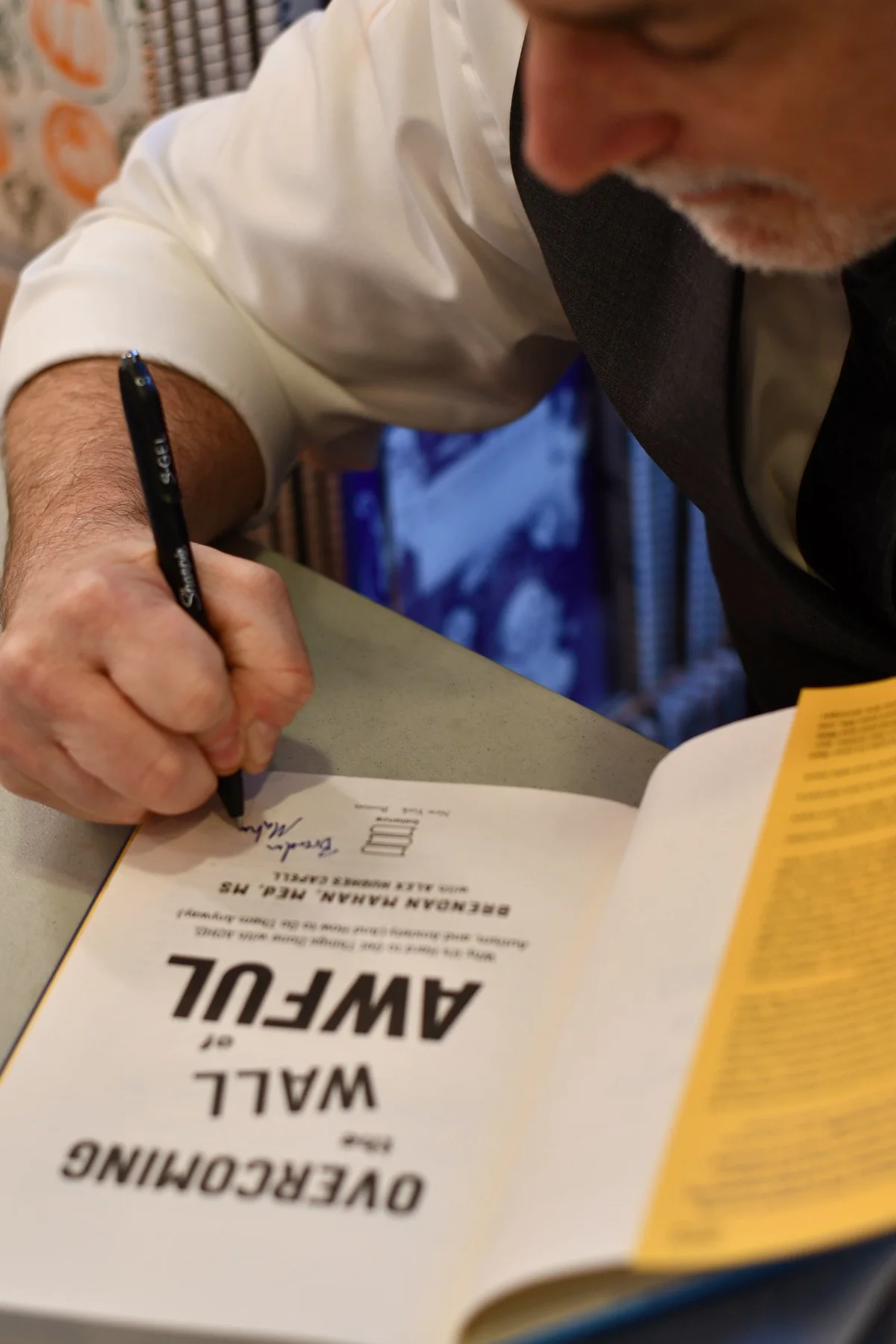
While Overcoming the Wall of Awful covers the model in depth, I recommend sharing the videos I did with my friend Jessica McCabe for her How to ADHD YouTube channel as the best way to introduce the idea: Part 1 and Part 2.
Talking about walls and bricks rather than procrastination, overwhelm, and shame helps reduce the overall pressure and keep new bricks from forming.