
Social hangover
Social hangover: why events wreck you, and how to come back
A social hangover is the day-after crash that follows a stretch of being around people. For neurodivergent adults, it shows up as fog, a flat mood, a short fuse, a body that feels like it's been through something physical, and a brain that won't load. It isn't a sign you're antisocial or fragile. It's the bill for running sensory, social, and masking load at the same time on a nervous system that doesn't reset on anyone else's schedule.
This is the long version. If you walked through the door an hour ago and you can already feel the wheels coming off, jump to the quick start and come back to the rest later.
TL;DR
- Social hangover is acute post-event recovery, not introversion and not weakness.
- Three loads stacked at once cause it: sensory input, social tracking, and masking work.
- The crash often hits hardest the next day — adrenaline carries you home, then leaves.
- First 24 hours: lower the inputs, drink water, defer decisions, and skip the doomscroll.
- If a hangover keeps lengthening, that's a different conversation — see autistic burnout.
Quick start: I left the event a few hours ago and I can't function
You don't need a recovery plan right now. You need to lower the load and let your body catch up. In rough order of priority:
- Dim the room. Overheads off, one warm lamp, blinds down. Eyes are an input too.
- Make it quiet. Loop earplugs, headphones with nothing playing, or pin the door shut and turn off the TV. Silence is the medicine here, not background noise.
- Drink water and eat something simple. Salt and protein, not sugar. Many people skip food during events; the crash is partly a blood-sugar story.
- Take no decisions tonight. Don't reply to the text you owe. Don't start the email. Don't have the relationship conversation. Defer.
- Don't doomscroll. The phone feels passive but it's another stream of input on a system that's already over. Put it in another room or in grayscale mode.
- Cancel one thing tomorrow. Future-you will pay the price for whatever you keep on the books. Pick the most cancellable item and cancel it now while the urge is still there.
When the dust settles, the recovery spoke goes deeper on what each phase needs. For now, lower the inputs and let the body do its work.
What a social hangover is
The phrase started in the ND community because the existing language wasn't doing the job. “Tired after socializing” doesn't cover it. “Drained” doesn't either. The word that lands is hangover — because the shape of the experience is the same. You spent a few hours doing something your body found taxing, and now you're paying for it in a body that doesn't fully feel like yours.
On the day of the event, you might feel fine while it's happening. You might even feel good — high on the connection, the conversation, the rare experience of being around your people. The crash often arrives later. Sometimes it's the cab ride home, when the lights of the venue drop behind you and your jaw unclenches and your face stops trying. More often it's the next morning. You wake up in a fog. The light through the window feels too loud. Your inbox looks like a foreign language. The sentence in your head that was supposed to be your first thought of the day comes out as static.
Symptoms run wider than people expect. Headache and a stiff neck. A short fuse with the people who live with you. Sound sensitivity that wasn't there yesterday. The fridge open for two minutes while you forget what you came for. A craving for carbs and salt. Tears that come out of nowhere over something small. The sense that the world is one notch too bright and one notch too fast.
None of that is a moral failure. None of it is a sign you can't handle being a person. It's a recovery state, and recovery states have a shape and an end. The point of having a name for it is so you can recognize it the next time it shows up and treat it as the predictable aftermath it is, instead of as evidence that something's wrong with you.
Worth saying clearly: this isn't introversion. Plenty of ND people who'd describe themselves as outgoing get socially hungover. The two ideas keep getting pasted together and they don't belong together. Introversion is about where your energy comes from. A social hangover is about how your nervous system pays for sensory and masking load. You can be both extroverted and prone to brutal hangovers. Many of us are.
Why it happens — three loads at once
The cleanest way to think about a social hangover is to break the event into the three loads your body was carrying through it. They run in parallel. Most people only count one of them, which is why the hangover keeps catching them off guard.
Sensory
Every light, sound, smell, and body in the room, processed at full resolution.
Social
Turn-taking, names, unspoken rules, whether the joke landed — all in the foreground.
Masking
The work of looking like none of the above is hard. Invisible, and billed later.
Sensory load
Lights, noise, smells, temperature, the press of bodies, music under conversation, an itchy collar, the cologne of the person you got hugged by. Every one of those is an input your nervous system has to process. Most ND brains process more of the input than less ND brains do, and at higher resolution. By the end of an evening, the cumulative cost of all that input is real, even if you don't notice any single piece of it being a problem in the moment.
Social load
This is the cognitive work of being with people. Tracking who's saying what, when it's your turn to speak, what the unspoken rules of this particular group are, what someone meant by that look, whether the joke landed, whether you remember this person's name. For many ND adults — autistic, ADHD, AuDHD — this work isn't automatic. It runs as foreground processing the entire time, and foreground processing burns a lot of fuel.
Masking load
Underneath both of the above runs the third load: the work of looking like none of this is hard. Holding the right facial expression. Not stimming visibly, even though stimming is what would settle you. Smiling at the right intervals. Saying yes to small talk that costs you. Hiding the fact that you didn't catch the question. Performing okay-ness in a body that's signaling overload. Masking is invisible labor, and invisibility is part of what makes it expensive — nobody else clocks the cost, including, often, you.
When all three run at once, on a nervous system that takes longer to discharge load than the average person's, the cost shows up after. Adrenaline keeps you propped up while you're in it.
The crash is the body finally allowed to feel what it spent the evening hiding from you.
If it helps to picture the energy math as a limited daily supply, spoon theory is a common way ND adults describe running out.
Social hangover vs autistic burnout — acute vs chronic
This is the bridge worth taking time on, because the language gets tangled fast. A social hangover and autistic burnout share the same raw material — sensory load, social load, and masking load on a nervous system that doesn't recover on a neurotypical timetable. The difference is scale.
A social hangover is acute. One event, one to three days of recovery, then capacity comes back. The arc is short and predictable. Plan around it, drop the inputs, eat and sleep, and the system rebuilds. The next time you feel like a person tends to be the day after that.
Autistic burnout is chronic. Months of accumulated load that the system never got to discharge. Skill regression — losing access to things you could do six months ago. A flatness that doesn't lift between events. Recovery measured in weeks and seasons, not days. Saying yes to less, for longer, while you rebuild. The hub for that recovery work lives at autistic burnout recovery.
The link between them is worth understanding. Frequent social hangovers that don't lift between events are sometimes the early shape of burnout. The first warning sign is usually a stretch where the hangover from one event is still in your body when the next event lands. The recovery curves start to overlap. Each event takes a little more out of you than the last one did. If you're noticing that pattern in yourself, treat it as data, not a character flaw. The fix is structural — fewer demands, longer gaps, lower-load formats — and the longer it goes unaddressed, the deeper into burnout it tends to go.
The dedicated comparison spoke at sensory hangover vs burnout goes deeper on the line between the two and how to tell where you are.
Autism From The Inside on the chronic end of this spectrum — useful if the pattern above sounded familiar. An outside resource, not affiliated with NeuroDiversion.
The recovery curve — what hours 0 to 24 look like
Recovery isn't one long flat slog. It moves through phases, and each phase wants something different from you. Knowing what's coming makes it easier to stop fighting your body and start working with it.
Hours 0 to 2 — the comedown
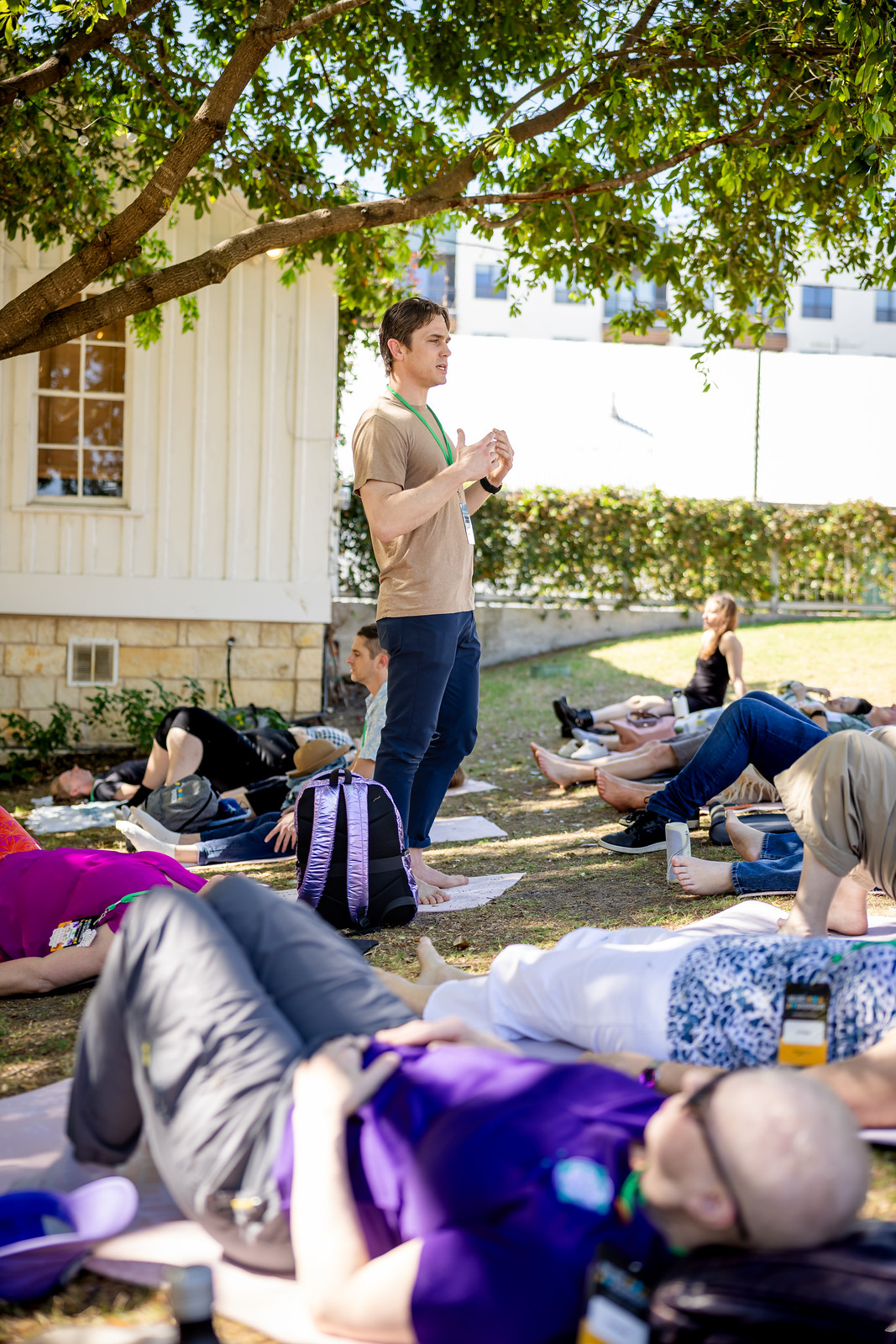
You've left the event. Adrenaline is still running but starting to drain. You feel wired and tired at the same time. This is the worst window for any kind of input — bright lights, screens, follow-up texts about the event. It's also the window where ND adults most often make decisions they regret: the late-night text, the impulsive plan for tomorrow, the email that should have waited. Treat this as a wind-down phase. Lower the lights. Hydrate. Eat. Don't make plans.
Hours 2 to 8 — sleep, ideally
Sleep does most of the recovery work. The catch is that ND adults often sleep badly after big events — keyed up, replaying conversations, processing things the body didn't have room to process in real time. If sleep doesn't come, lower the bar. Lying flat in the dark with eyes closed is most of the value. Don't escalate to a sleep aid you don't usually take — that becomes a problem on top of a problem.
Hours 8 to 16 — the fog
The morning after. This is the heart of the hangover and the phase most people misread. The fog feels like depression but isn't. The flatness lifts on its own as the system reloads. What helps: protein and water on waking, gentle movement (a walk, not a workout), sunlight if you can stand it, nothing that requires sustained focus, no high-stakes social interaction. Treat your output expectations like you're at sixty percent and plan accordingly.
Hours 16 to 24 — the reload
Capacity starts coming back, in patches. You'll have a clear hour, then a foggy one, then another clear one. Don't trust the first clear hour and pile work onto the next four. Use the clear windows for the things that matter and pad the rest of the day with low-load activity. By the time you're going to bed on day two, most people are functional again. If you're not, the hangover is bigger than usual and tomorrow can stay light too.
More phase-by-phase detail on the post-event recovery spoke, including specific event types and what each one tends to demand from you.
Recognizing your specific triggers
Hangovers don't scale linearly with how long an event was or how many people were there. A two-hour event in the wrong format can wreck you worse than a four-hour event that suits you. The work is figuring out which variables in your life crank the cost up the most. A short list of the usual suspects:
Loud venues with hard surfaces
Restaurants with concrete floors, bars with low ceilings, anywhere conversation requires raising your voice. The volume tax compounds.
Small talk volume
Five short conversations with five different people will often cost more than one ninety-minute conversation with one person, even though the total time is similar. Switching costs are real.
Novel environments
A familiar venue lets your nervous system tune out parts of the input. A first-time venue runs everything as foreground for the whole night.
Specific people
Some people require more masking from you than others. The ones who require the most aren't always the ones you'd guess. Notice which company leaves you most wrecked the next day, and let that data shape your future yes-and-no decisions.
Open-ended timing
An event with a clear end time costs less than one that drifts. Knowing when you can leave is part of what your body uses to pace itself.
Stacked events
Two events in a weekend cost more than two events with a recovery day between them. The system isn't done unloading from the first one when the second one starts.
The symptoms spoke and the prevention spoke go deeper on tracking your own pattern and adjusting events before you arrive instead of after.
A note from the inside — designing events that don't wreck people
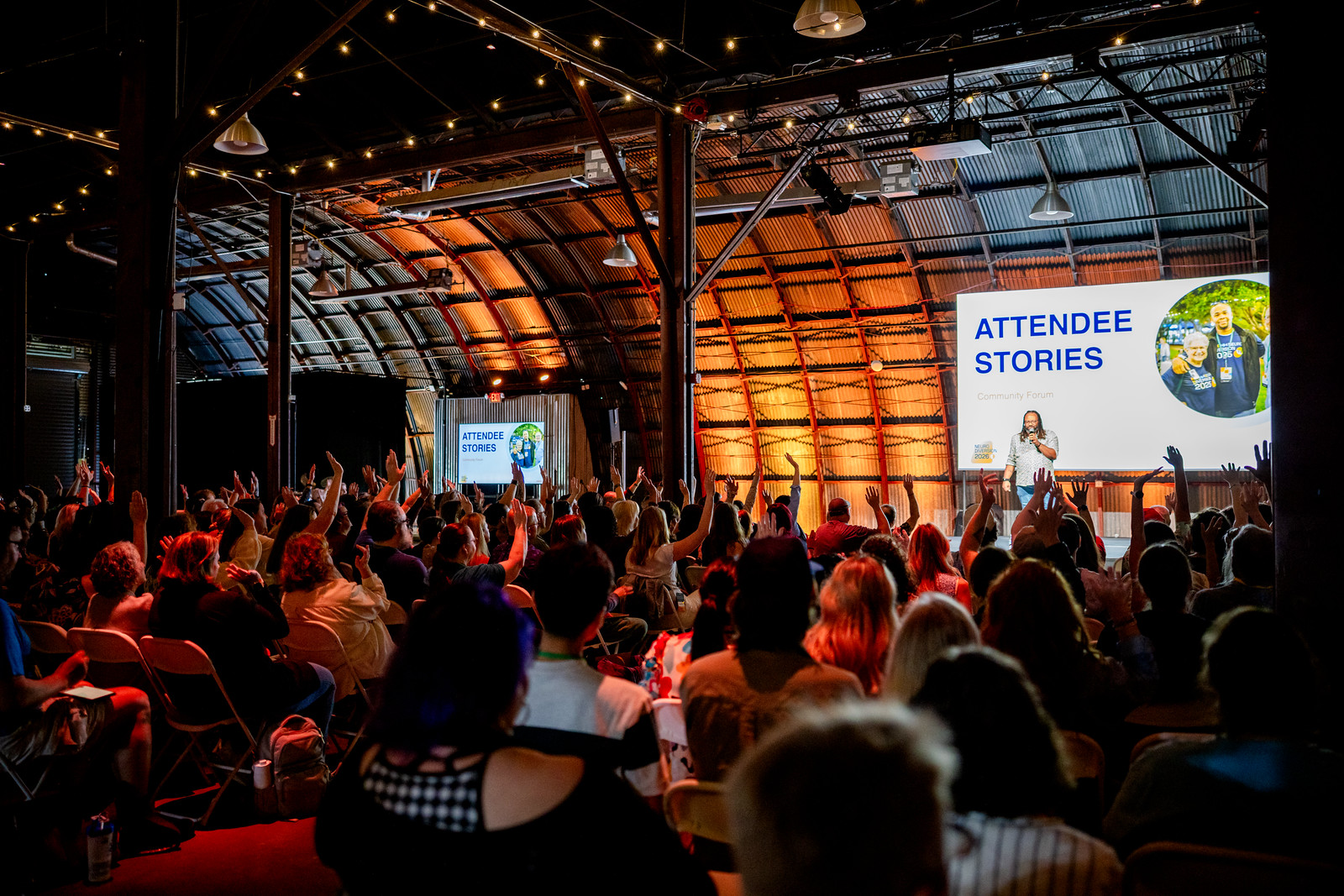
NeuroDiversion runs an annual conference for ND adults in Austin, and most of what we know about social hangovers we learned by trying to keep our own attendees out of one. Every choice on the floor plan ends up being a hangover choice, even when the planners didn't know that's what they were making. A few patterns that hold up.
Lighting matters more than people think. Overhead fluorescents alone will tip a sizable share of the room into hangover territory by hour three. Mixing in lamps, daylight, and dimmable warm bulbs gives nervous systems a way to find a softer corner without leaving the room.
Quiet rooms are a feature, not an afterthought. A real one — soundproofed, low-lit, no programming — that's on the map and signposted. The trick is making it socially acceptable to use, which means putting it in the schedule, not hiding it behind a stigma.
Schedules need air. Back-to-back sessions with five-minute transitions are the fastest way to send people home wrecked. Longer breaks, fewer mandatory items, and explicit permission to skip — written into the program, not whispered as a kindness — change the math on what an attendee can sustain.
Food choices matter too. Loud cafeterias with one entry point cost more than a buffet you can take to a quieter spot. Dietary needs that get treated as paperwork instead of as care leave their own kind of social bruise. The cumulative effect of small choices like these is the difference between a conference attendees can finish and one they leave halfway through.
Most events aren't designed by people who think about hangovers. The ones that are feel different to attend in a way that's hard to put into words until you've been to one — and the difference shows up in how wrecked you are the next day, not in anything that happens at the event itself.
When it's bigger than a hangover
A hangover that lasts a week is a different conversation. So is a hangover that gets worse rather than better as the days pass, or one where the fog never lifts before the next event puts you back under. Patterns to watch for:
- Recovery taking longer each time, with no obvious reason — same kind of event, more cost than it used to carry.
- Skill regression that hangs around — finding yourself unable to do work or daily tasks you handled fine a few months ago.
- A flat mood that doesn't lift between events, even on a recovery day that should have helped.
- Frequent autistic shutdowns where there used to be hangovers.
- A pattern of canceling more than you keep, even for things you wanted.
Any of those is a signal worth taking seriously. The cleanest framing is that hangovers are acute and burnout is chronic, and chronic conditions don't respond to acute fixes. A weekend off won't reset months of accumulated load. The autistic burnout recovery hub is built for the chronic version of this story.
This page isn't medical advice. It's lived-experience language meant to help you describe what's happening — to yourself first, and to a clinician familiar with adult neurodivergence second.
Frequently asked questions
Is a social hangover the same as being introverted?
No, and conflating the two misses what's happening. Introversion is a preference about how you recharge. A social hangover is a nervous-system bill that comes due after sensory load, social load, and masking load stack on top of each other. Plenty of extroverted ND adults get walloped by social hangovers — they wanted to go, they had a good time, and they still can't function the next day.
How long does a social hangover last?
For most people, the worst of it covers the evening of the event and the day after. A bigger event — a wedding, a conference, a multi-day family stay — can stretch into two or three days of fog, low energy, and a short fuse. If a single event puts you under for a week or longer, that's worth paying attention to. It can be an early signal of autistic burnout, which has its own slower arc.
What's happening in my body during a social hangover?
Three loads ran at once and the system is paying for it. Sensory input (lights, noise, smells, bodies in motion) kept your nervous system on alert. Social input (reading faces, tracking turn-taking, holding context for several conversations) ran your brain hot. Masking — the work of hiding all of the above so you read as fine — ran in the background the whole time. Recovery is the quiet hours your body needs to drain that load.
Why does it hit harder the next day instead of right after?
Adrenaline. While the event is happening, your body keeps you upright by running on alert chemistry. Once you're somewhere safe and the alert drops, the bill arrives. The fog, the headache, the can't-look-at-my-phone feeling on day two — that's the system finally letting itself feel the cost it was hiding from you in real time.
How is a social hangover different from autistic burnout?
Scale and timeline. A hangover is acute — one event, one to three days, you come back. Autistic burnout is chronic — months of accumulated overload your system never got to discharge, and recovery is measured in weeks or seasons. Frequent hangovers that don't lift between events are sometimes the early shape of burnout. If that pattern fits, the autistic burnout recovery hub is the next read.
I have to function tomorrow. What's the minimum-viable recovery plan?
Tonight: dim the room, put noise away, drink water, eat something with protein and salt, no screens within an hour of bed. Tomorrow: lower expectations on yourself by about a third, take movement outside if you can, defer any decision you can defer, keep meals simple, and keep your social load to people who don't require performance. You won't be at full capacity. Plan around that instead of fighting it.
An event that doesn't wreck the people who go to it
NeuroDiversion runs a yearly gathering for ND adults in Austin, and the whole thing is built around the patterns on this page — softer lighting, real quiet rooms, breaks long enough for nervous systems to discharge, a schedule that has air in it. If reading this hub felt like someone finally describing the post-event versions of you that nobody else sees, that crowd is worth meeting in person.
In person, in Austin
A room full of people who get it
Once a year, neurodivergent adults gather in Austin for talks, workshops, and the rare feeling of not having to explain yourself. March 2027.
See what it is